

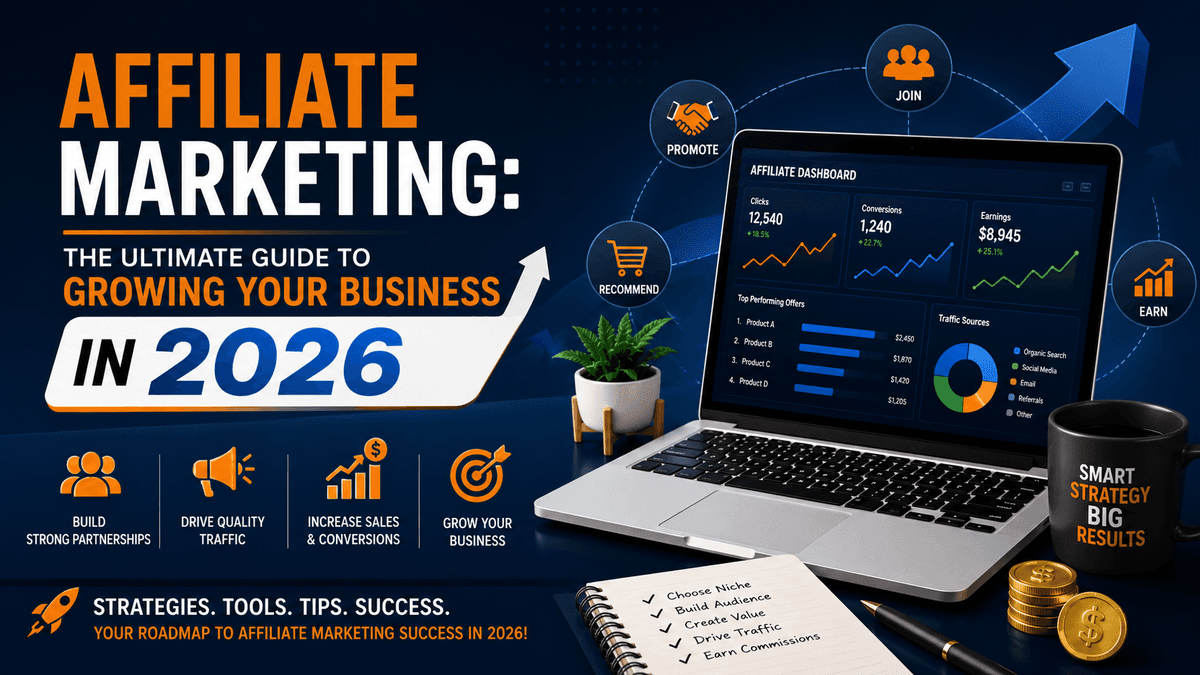
Affiliate Marketing: The Ultimate Guide to Growing Your Business in 2026
Published: 2026-08-08 08:46:52
In today's digital-first economy, businesses are constantly searching for cost-effective ways to grow their revenue without spending a fortune on traditional advertising. This is where affiliate marketing steps in as a game-changer. Whether you're an e-commerce brand, a SaaS company, or a service-based business, affiliate marketing allows you to tap into a network of partners who promote your products or services in exchange for a commission on every sale or lead they generate.
At Promfly, we specialize in building result-driven affiliate marketing campaigns that connect brands with the right affiliates, publishers, and influencers to maximize online visibility and sales. In this article, we'll break down everything you need to know about affiliate marketing — how it works, its benefits, strategies, and how our team can help you build a profitable affiliate program from the ground up.
What is Affiliate Marketing?
Affiliate marketing is a performance-based marketing strategy where a business rewards one or more affiliates (partners, bloggers, influencers, or content creators) for driving traffic or sales to their website through the affiliate's own marketing efforts. It's essentially a partnership between a merchant (the brand) and an affiliate (the promoter), built on a pay-per-performance model.
Unlike traditional advertising, where you pay upfront regardless of results, affiliate marketing ensures you only pay when a desired action — a sale, lead, click, or sign-up — actually happens. This makes it one of the most cost-efficient digital marketing channels available today, alongside strategies like influencer marketing, performance marketing, and content marketing.
Get Expert Digital Marketing Support
Ready to grow your online presence? Connect with the Promfly team for tailored digital marketing, SEO, branding, and performance marketing solutions.
Call Us: +91 7303881503
Email Us: info@promfly.com
Visit Us: 2/81-82, Ground Floor, Lalita Park, Gali No - 2, Laxmi Nagar, New Delhi - 110092
Contact Promfly today and take the next step toward measurable digital growth.
How Does Affiliate Marketing Work?
Affiliate marketing is a performance-based marketing model where businesses reward affiliates for bringing customers, leads, or sales through their promotional efforts. It works as a simple win-win system: the business gets more customers, while the affiliate earns a commission for generating results.
The affiliate marketing ecosystem generally involves four key players:
1. The Merchant (Advertiser)
The merchant is the brand, company, or business that offers a product or service. Instead of relying only on traditional advertising, the merchant partners with affiliates to reach a wider and more targeted audience.
For example, an online store may offer affiliates a commission for every customer they refer who makes a purchase.
2. The Affiliate (Publisher)
The affiliate is the individual, content creator, blogger, influencer, or company that promotes the merchant's products or services.
Affiliates can use different channels to attract potential customers, including:
- Blogs and SEO content
- Social media platforms
- YouTube videos
- Email marketing
- Product reviews and comparison websites
- Paid advertising campaigns
Each affiliate receives a unique tracking link or referral code, allowing the merchant to identify the sales or leads generated by that affiliate.
3. The Consumer
The consumer is the person who interacts with the affiliate's promotional content and ultimately purchases a product, signs up for a service, submits a form, or completes another desired action.
For instance, a customer may read a product review on a blog, click the affiliate link, visit the merchant's website, and make a purchase.
4. The Affiliate Network
An affiliate network acts as a bridge between merchants and affiliates. It helps businesses manage affiliate programs while providing affiliates with access to products and campaigns they can promote.
Affiliate networks also help track important performance data such as clicks, conversions, sales, and commissions, making the entire process more transparent and manageable.
Wondering about website development cost in India? Explore our complete pricing guide.
How Does the Affiliate Marketing Process Work?
The process is relatively straightforward:
Step 1: A business joins an affiliate program
The merchant creates or joins an affiliate program and defines the commission structure and promotional terms.
Step 2: Affiliates receive tracking links
Approved affiliates receive a unique affiliate link, referral code, or tracking ID connected to the merchant's website.
Step 3: Affiliates promote the product
The affiliate introduces the product or service to their audience through blogs, social media posts, videos, email campaigns, reviews, or other marketing channels.
Step 4: A customer clicks the affiliate link
When a potential customer clicks the unique link, tracking technology records the referral and attributes the visitor to the affiliate.
Step 5: The customer completes an action
If the customer purchases the product, submits a lead form, signs up for a service, or completes another qualifying action, the conversion is recorded.
Step 6: The affiliate earns a commission
Once the conversion is verified according to the program's terms, the affiliate receives a commission.
Learn how to get featured in Google AI Overviews with practical SEO strategies.
A Simple Example
Imagine you write a blog reviewing a popular software tool and include your affiliate link in the article. A reader finds your article through Google, clicks your link, and purchases the software.
The software company gets a new customer, the customer gets the product they were looking for, and you earn a commission for referring the customer.
That's the basic idea behind affiliate marketing: promote, refer, convert, and earn.
Follow our YouTube SEO checklist to optimize your videos, improve rankings, and increase visibility.
Why Affiliate Marketing Matters for Your Business
Affiliate marketing has become a core pillar of digital marketing strategy for brands looking to scale efficiently. Here's why it's worth investing in:
1. Cost-Effective and Low Risk
You only pay affiliates when they deliver actual results, making it a low-risk, high-reward marketing channel compared to traditional CPC or CPM advertising.
2. Expands Brand Reach
Affiliates often have established audiences and niche authority. Partnering with the right affiliates helps you tap into new customer segments organically.
3. Boosts SEO and Online Visibility
Quality backlinks from affiliate blogs and websites can improve your domain authority and search engine rankings, complementing your SEO strategy.
4. Builds Trust Through Third-Party Endorsement
Consumers trust recommendations from bloggers, influencers, and content creators more than direct brand advertising, improving conversion rates.
5. Scalable Growth
As your affiliate network grows, so does your revenue potential — without a proportional increase in marketing spend.
Did your Google rankings drop after the June 2026 update? Find out why and how to recover.
Types of Affiliate Marketing
Understanding the different types of affiliate marketing helps businesses choose the right approach for their goals:
- Unattached Affiliate Marketing – The affiliate has no direct connection to the product; promotion is purely through paid ads or general content.
- Related Affiliate Marketing – The affiliate has some authority or niche relevance to the product, such as a tech blogger promoting gadgets.
- Involved Affiliate Marketing – The affiliate has personally used the product and promotes it based on real experience, building stronger trust and credibility.
Other common affiliate marketing models include:
- Pay-Per-Sale (PPS) – Commission paid when a sale is completed.
- Pay-Per-Lead (PPL) – Commission paid when a lead (sign-up, form fill) is generated.
- Pay-Per-Click (PPC) – Commission based on the number of clicks generated, regardless of conversion.
How to Build a Successful Affiliate Marketing Strategy
Launching an affiliate program can be a powerful way to generate consistent sales, expand your online reach, and connect with new audiences. However, simply signing up affiliates is not enough. A successful affiliate marketing strategy requires clear goals, the right partners, strong incentives, and continuous performance tracking.
Here are the key steps to building an affiliate program that delivers measurable results:
1. Define Clear and Measurable Goals
Start by identifying what you want your affiliate program to achieve. Are you looking to increase brand awareness, generate qualified leads, drive website traffic, or boost direct sales?
Setting specific goals will help you choose the right affiliates, commission structure, and performance metrics. For example, an e-commerce business may focus on sales, while a SaaS company may prioritize qualified leads or free-trial sign-ups.
Learn how local businesses can appear in AI answers in 2026 and improve their online visibility.
2. Choose the Right Affiliate Network or Platform
The platform you choose can have a major impact on how efficiently you manage your affiliate program. Look for a reliable solution that provides:
- Accurate conversion and click tracking
- Real-time performance reporting
- Easy affiliate management
- Secure and timely payment processing
- Fraud detection and prevention features
- Integration with your website or e-commerce platform
A well-equipped platform makes it easier to manage affiliates and understand which campaigns are actually generating results.
Learn how to rank in ChatGPT and improve your brand's visibility in AI-powered search.
3. Set Competitive Commission Rates
Your commission structure should be attractive enough to encourage affiliates to promote your products while still protecting your profit margins.
Research what competitors and similar affiliate programs are offering before deciding on your rates. You can also introduce performance-based incentives, bonuses, or higher commission tiers for affiliates who consistently generate quality sales.
The goal is simple: create a commission structure that makes affiliates feel rewarded for the value they bring to your business.
4. Recruit Quality Affiliates
A large affiliate network does not necessarily mean a successful one. Quality matters more than quantity.
Look for bloggers, influencers, YouTubers, publishers, website owners, and content creators whose audience matches your target customers. Affiliates with relevant and engaged audiences are more likely to generate genuine traffic, qualified leads, and conversions.
Before partnering with an affiliate, consider their:
- Audience relevance
- Content quality
- Engagement levels
- Online reputation
- Promotional methods
- Previous performance
The right affiliates can become long-term marketing partners rather than simply one-time promoters.
5. Provide the Right Marketing Resources
Make it easy for affiliates to promote your products effectively. Give them access to ready-to-use resources such as affiliate links, banners, product images, videos, product descriptions, social media creatives, email templates, and promotional guidelines.
You can also provide content suggestions, key product benefits, seasonal campaigns, and exclusive offers. The easier you make promotion, the more likely affiliates are to actively market your products.
6. Track Performance and Continuously Optimize
A successful affiliate program should never run on autopilot. Regularly monitor important metrics such as click-through rates, conversion rates, average order value, customer acquisition cost, revenue, and return on investment (ROI).
Use these insights to identify your top-performing affiliates, understand which promotional channels generate the best results, and improve underperforming campaigns.
You can then experiment with different commission rates, promotional offers, landing pages, and content strategies to continuously improve your affiliate marketing performance.
Build an Affiliate Program That Grows With Your Business
Affiliate marketing can become a scalable and cost-effective customer acquisition channel when it is built around the right strategy. By setting clear goals, partnering with relevant affiliates, offering attractive incentives, providing useful marketing resources, and regularly analyzing performance, businesses can create an affiliate program that delivers sustainable growth.
The key is to focus not just on how many affiliates you recruit, but on how much value they generate for your business
Common Challenges in Affiliate Marketing (and How to Overcome Them)
- Fraudulent Clicks or Fake Leads – Use reliable tracking software with fraud detection.
- Low Affiliate Engagement – Offer incentives, bonuses, and regular communication to keep affiliates motivated.
- Brand Misrepresentation – Set clear guidelines and monitor affiliate content for compliance.
- Attribution Issues – Use multi-touch attribution models to fairly credit affiliates across the customer journey.
This is where working with an experienced digital marketing agency like Promfly makes a real difference — we help you navigate these challenges with proven systems and industry expertise.
SEO vs Google Ads: Compare both strategies to find the right approach for your business.
How Promfly Helps You Succeed with Affiliate Marketing
At Promfly, we don't just set up affiliate programs — we build sustainable, revenue-generating partnerships tailored to your business goals. Our affiliate marketing services include:
- Affiliate program strategy and setup
- Affiliate recruitment and onboarding
- Commission structure planning
- Performance tracking and analytics
- Content and creative asset support for affiliates
- Ongoing optimization for maximum ROI
Whether you're just starting out or looking to scale an existing affiliate program, our team combines data-driven insights with creative marketing strategies to help your brand grow through trusted partnerships.
Frequently Asked Questions (FAQs)
Q1. What is affiliate marketing in simple terms?
Affiliate marketing is a way for businesses to grow sales by partnering with individuals or websites (affiliates) who promote their products in exchange for a commission on each successful sale or lead.
Q2. Is affiliate marketing profitable for small businesses?
Yes. Since you only pay for actual results, affiliate marketing is a low-risk, high-return strategy that works well for businesses of all sizes, including startups and small businesses.
Q3. How much does it cost to start an affiliate marketing program?
Costs vary depending on the platform, commission structure, and management approach. Promfly can help you design a program that fits your budget while maximizing returns.
Q4. How long does it take to see results from affiliate marketing?
Most businesses start seeing measurable traction within 2–4 months, though results depend on affiliate quality, industry, and campaign strategy.
Q5. What industries benefit most from affiliate marketing?
E-commerce, SaaS, fashion, beauty, finance, travel, and education industries commonly see strong results, though affiliate marketing can be adapted for almost any business model.
Q6. Can Promfly manage my entire affiliate program?
Yes. Promfly offers end-to-end affiliate marketing management, from strategy and affiliate recruitment to tracking, reporting, and optimization.
Ready to Grow Your Business with Affiliate Marketing?
Affiliate marketing is one of the most powerful, performance-driven strategies to scale your brand's revenue and online presence. With the right partners, tracking systems, and strategy in place, it can become a consistent, long-term revenue channel for your business.
At Promfly, we help brands design, launch, and manage affiliate marketing programs that deliver real, measurable results. Let's build a strategy that turns partnerships into profit.
Get in Touch with Promfly Today
Call Us +91 7303881503
Email Us info@promfly.com
Visit Us 2/81-82, Ground Floor, Lalita Park, Gali No - 2, Laxmi Nagar, New Delhi - 110092